

Featured Publications
-
![Underwater scene with rocks and coral on the ocean floor, sunlight streaming down through the water, creating a serene aquatic environment.]()
General predictions for the effects of warming on competition
Davis, Kaleigh, Tess N. Grainger, Po-Ju Ke, Patrick L. Thompson, Mary I. O'Connor, and Joey R. Bernhardt (2026) in Ecology Letters
-
![Freshly caught rainbow trout fish on a white oval platter, garnished with lemon slices and herbs, placed on a rustic wooden surface.]()
Linking community‐climate disequilibrium to ecosystem function
Stemkovski, M., Cortez, M. H., Bernhardt, J. R., Bladen, K. K., Bradford, J. B., Clark‐Wolf, K., ... & Adler, P. B. (2026) in Ecology Letters, 29(1), e70314
-
![Close-up of green grass blades with droplets of water on them.]()
Toward a more dynamic metabolic theory of ecology to predict climate change effects on biological systems
Stark, K. A., Clegg, T., Bernhardt, J. R., Grainger, T. N., … & Pawar, S. (2025) in The American Naturalist, 205(3), 285–305
-
![An evening sky with clouds rolling in over the landscape]()
Ecological acclimation: A framework to integrate fast and slow responses to climate change
Stemkovski, M., Bernhardt, J. R., … Adler, P. B. (2025) in Functional Ecology, 00, 1–17
-
![A mosquito pauses, perched on a green leaf]()
Mean daily temperatures predict the thermal limits of malaria transmission better than hourly rate summation
Shocket, M.S., Bernhardt, J.R., Miazgowicz, K.L. et al. (2025) in Nat Commun(16), 3441
-
![]()
Harnessing open science practices to teach ecology and evolution using interactive tutorials
Jory Griffith, Elizabeth Houghton, … Joey R. Bernhardt (2024) in Ecology and Evolution, 14, e11179.





Our work has been published in






A few of our favorite reads
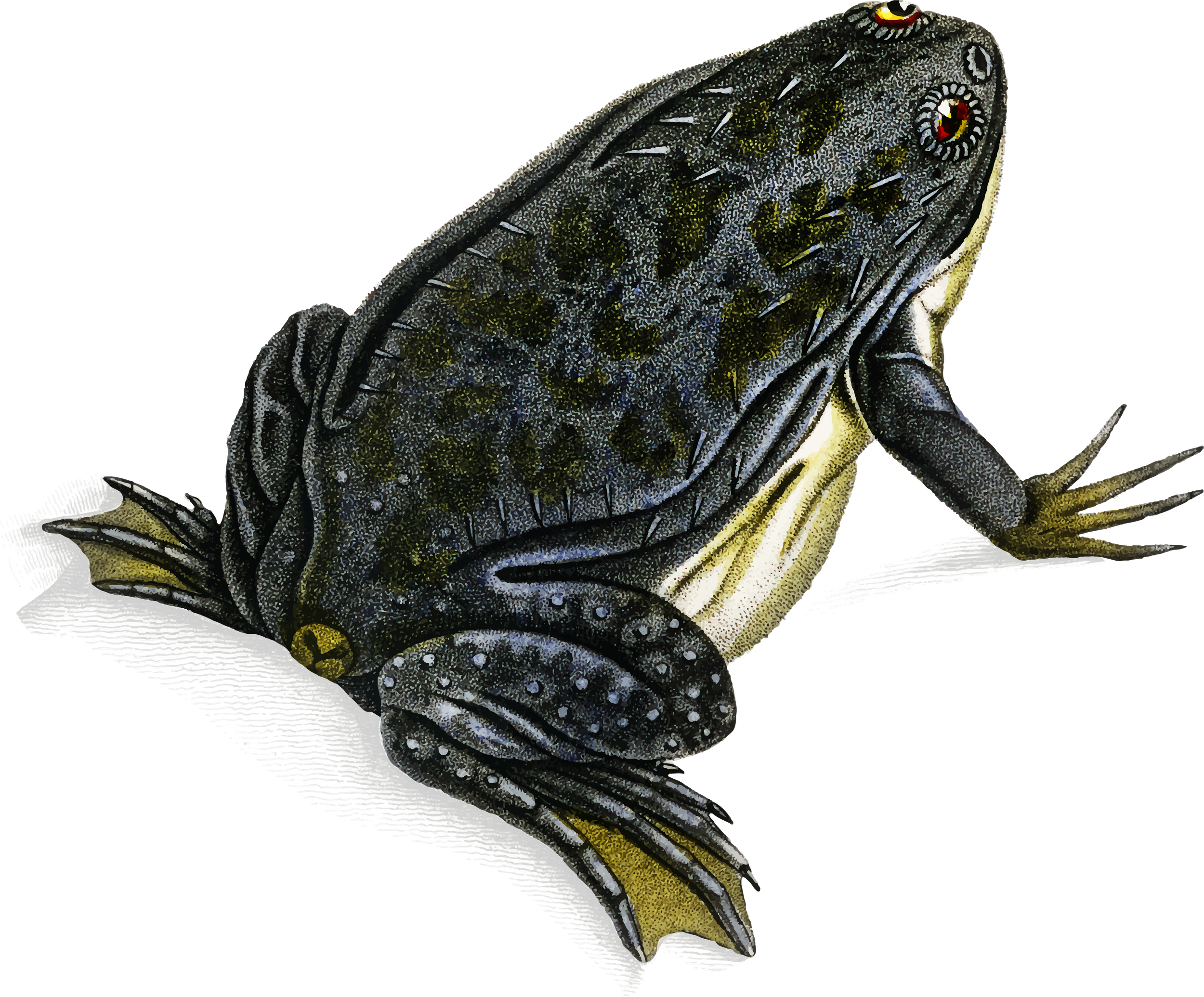
Temperate species underfill their tropical thermal potentials on land
Moore, N.A., Morales-Castilla, I., Hargreaves, A.L., Bernhardt, J.R., et al. (2023) in Nat Ecol Evol7, 1993–2003.
This study examined whether species live in all the places that their temperature tolerances would allow. The researchers found that marine species and tropical land species generally occupy environments that closely match their thermal limits, suggesting that temperature strongly determines their distributions. In contrast, many temperate and polar land species do not extend into warmer regions that are still thermally suitable, indicating that factors other than temperature—such as competition with other species—may restrict their ranges.
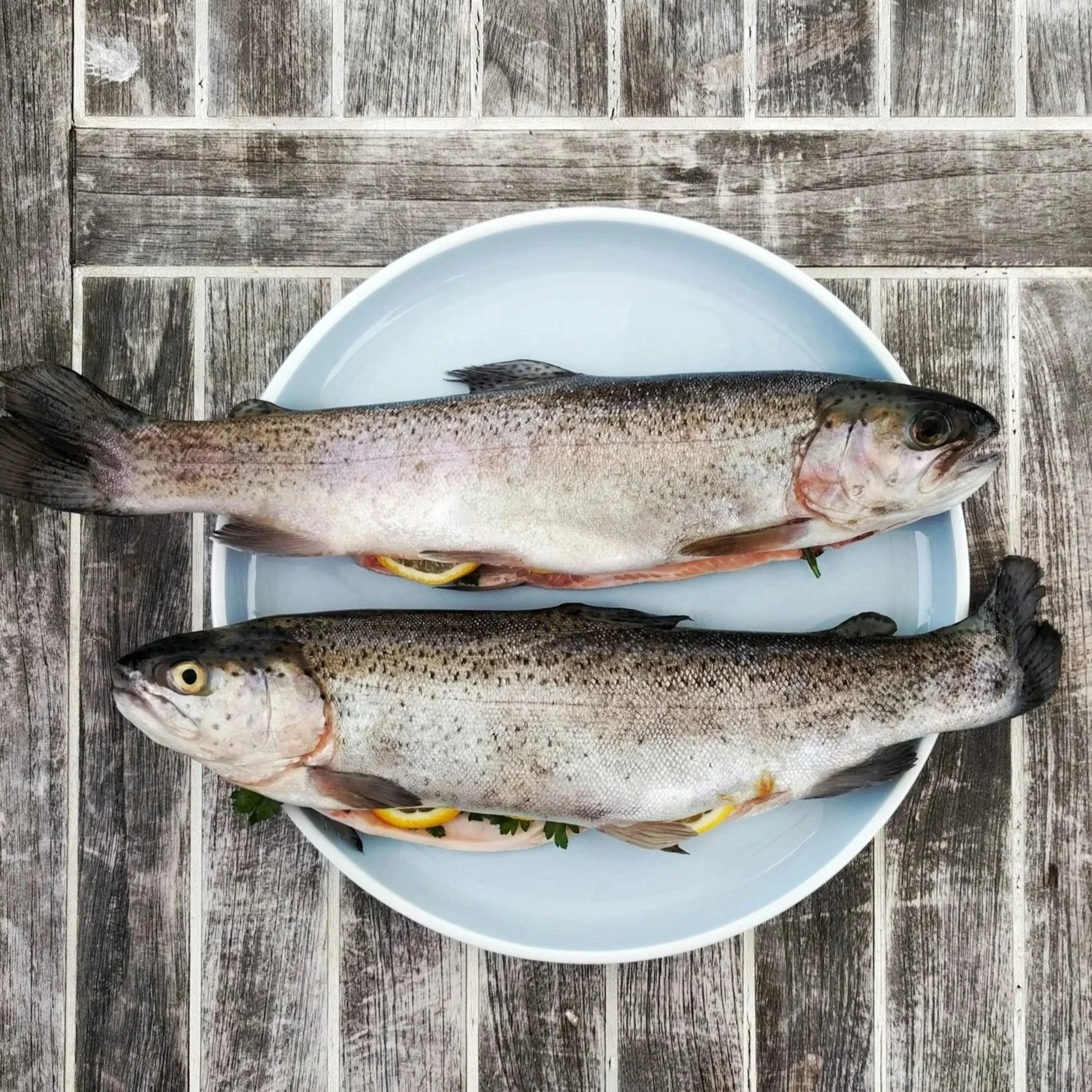
Aquatic biodiversity enhances multiple nutritional benefits to humans
Bernhardt, J.R. and M.I. O’Connor (2021) inProceedings of the National Academy of Sciences
We analyzed a newly synthesized dataset of 7,245 observations of nutrient and contaminant concentrations in 801 aquatic animal taxa and found that species with different ecological traits have distinct and complementary micronutrient profiles but little difference in protein content. The same complementarity mechanisms that generate positive biodiversity effects on ecosystem functioning in terrestrial ecosystems also operate in seafood assemblages, allowing more diverse diets to yield increased nutritional benefits independent of total biomass consumed.
Life in fluctuating environments
Bernhardt, J.R., O’Connor, M.I., Sunday, J.M and A. Gonzalez (2020) in Philosophical Transactions of the Royal Society B
Here we provide a framework describing how feedback and feedforward mechanisms operating within organisms can generate effects across scales of organization, and how they allow living systems to persist in fluctuating environments. Daily, seasonal and multi-year cycles provide cues that organisms use to anticipate changes in physiologically relevant environmental conditions. Using feedforward mechanisms, organisms can exploit correlations in environmental variables to prepare for anticipated future changes.
In the pipeline and preprints:
Stark, Keila, Patrick L. Thompson, Joey R. Bernhardt, Coreen Forbes, Kaleigh E. Davis, Evgeniya Yangel, Andrea S. Jackman, Malena Heinrichs, Laura Wegener Parfrey, and Mary I. O’Connor. Dispersal transiently modifies the temperature dependence of ecosystem productivity after an extreme thermal fluctuation.bioRxiv (2025): 2025-12.
Cicchino, Amanda S., Jessica Collier*, Carling Bieg, Kaleigh Davis, Cameron K. Ghalambor, Alison J. Robey, Jennifer M. Sunday, David Vasseur, and Joey R. Bernhardt. Temperature-dependent performance scales with maximum heat tolerance across ectotherms.bioRxiv (2026): 2026-03.
Laurich, Jason R., Anita Narwani, and Joey R. Bernhardt. Pareto fronts reveal constraints on the evolution of niche-determining traits in phytoplankton.bioRxiv (2026): 2026-03.
*undergraduate mentee
2023 and earlier
2023
Sunday, J.M., Bernhardt, J.R., Harley, C.D.G. & O’Connor, M.I. (2023).Temperature dependence of competitive ability is cold-shifted compared to that of growth rate in marine phytoplankton.Ecology Letters, 00, 1–12.
Moore, N.A., Morales-Castilla, I., Hargreaves, A.L., Bernhardt, J.R., et al.Temperate species underfill their tropical thermal potentials on land.Nat Ecol Evol7, 1993–2003 (2023).
Singh, G. G., Sajid, Z., Khan, F., Mather, C., Bernhardt, J. R., & Frölicher, T. L. (2023). Rethinking disaster risk for ecological risk assessment.Frontiers in Ecology and Evolution, 11, 1249567.
Thompson, P.L., … Bernhardt, J.R. et al. (2023). Biotic interactions structure zooplankton metacommunity dynamics following a summer heatwave. Authorea Preprints.
B Dantzer, B., … Bernhardt, J.R. et al. (2023). Understanding Organisms Using Ecological Observatory Networks.Integrative Organismal Biology, Volume 5, Issue 1, 2023, obad036.
Muir, A. M., J. R. Bernhardt, N. W. Boucher, C. Cvitanovic, J. M. Dettmers, M. Gaden, J. L. M. Hinderer et al. Confronting a post-pandemic new-normal—threats and opportunities to trust-based relationships in natural resource science and management.Journal of Environmental Management 330 (2023): 117140.
Slein, M.A., Bernhardt, J.R., O’Connor, M.I. and S.B. Fey, 2023. Effects of thermal fluctuations on biological processes: a meta-analysis of experiments manipulating thermal variability. Proceedings of the Royal Society B.
2022
Harrison, J.F., Biewener, A., Bernhardt, J. R., Brown, J. H., Coto, Z. N., Duell, M.E. Lynch, M., Moffett, E. R., Norin, T. N., Pettersen, A. K., Smith, F. A., Traniello, J.R., and T. M. Williams, 2022. White paper: An Integrated Perspective on the Causes of Hypometric Metabolic Scaling in Animals. Integrative and Comparative Biology.
O'Connor, M. I., Bernhardt, J. R., Stark, K., Usinowicz, J., & Whalen, M. A. 2022. Experimental Evidence for How Biodiversity Affects Ecosystem Functioning.The Ecological and Societal Consequences of Biodiversity Loss, 97-118.
2021
Twining, C., Bernhardt, J.R., Derry, A., Hudson, C., Ishikawa, A., Kabeya, N., Kainz, M., Kitano, J., Kowarik, C., Ladd, S.N. and Leal, M., Scharnweber, K., Shipley, J., Matthews, B 2021. The evolutionary ecology of fatty-acid variation: implications for consumer adaptation and diversification. 2021, Ecology Letters [preprint]
Srivastava, D.S., Coristine, L., Angert, A.L., Bontrager, M., Amundrud, S., Williams, J., Yeung, A.C.Y., de Zwaan, D.R., Thompson, P.L., Aitken, S.N., Sunday, J.M., O’Connor, M.I., Whitton, J., Brown, N.E.M., MacLeod, C.D., Wegener Parfrey, L., Bernhardt, J.R., Carrillo, J., Harley, C.D.G., Martone, P.T., Freeman, B.G., Tseng, M., Donner, S.D. Wildcards in climate change biology. 2021 . Ecological Monographs.
Marshall., K., Brown, N., Dytnerski, J., Klynn, K., Bernhardt, J.R., Konecny, C., Gurney-Smith, H., Anderson, K., C. Harley. Thermal sensitivity at constant temperatures does not predict responses under varying temperatures in an ecosystem engineer. 2021. Proceedings of the Royal Society B.
Bernhardt, J.R. and M.I. O’Connor. Aquatic biodiversity enhances multiple nutritional benefits to humans. 2021. Proceedings of the National Academy of Sciences. [PDF][SI Appendix][bioRxiv preprint]. Selected press coverage and highlights
2020
Bernhardt, J.R., O’Connor, M.I., Sunday, J.M and A. Gonzalez. Life in fluctuating environments. 2020. Philosophical Transactions of the Royal Society B. [link to paper][EcoEvoRxiv preprint][code and data]
Eddy, T.D., Bernhardt, J.R. Blanchard, J. L., Colléter, M. , Cheung, W. W. L., Du Pontavice, H., Fulton, E. A., Gascuel, D., Kearney, K. A, Petrik, C. M., Roy, T. , Rykaczewski, R. R, Selden, R., Stock, C. A., Wabnitz, C. C. C., Watson, R. A. Energy flow through marine ecosystems: confronting trophic transfer efficiency. 2020. Trends in Ecology and Evolution.
Brown, N.E.M., Bernhardt, J.R. and C.D.G. Harley, 2020. Energetic context determines species and community responses to ocean acidification. Ecology. [link] [data][code]https://doi.org/10.1002/ecy.3073
Bernhardt, J.R., Kratina, P, Pereira, A, Tamminen, M., Thomas, M.K.T, and A. Narwani, 2020. The evolution of competitive ability for essential resources.Philosophical Transactions of the Royal Society B [bioRxiv preprint][data][code][link] http://doi.org/10.1098/rstb.2019.0247
2019
Bernhardt, J.R., 2019. Linking individual performance to population persistence in a changing world. 103-107. In Predicting Future Oceans: Sustainability of Ocean and Human Systems Amidst Global Environmental Change. Ed. Cheung, W.W.L. Elsevier [link]
Singh, G. Hilmi, N.; Bernhardt J.R., Cisneros Montemayor, A; Cashion, M; Ota, Y; Acar, S; Brown, J; Cottrell, R; Djoundourian, S; Gonzalez-Espinosa, P; Lam, V; Marshall, N, Neumann, B; Pascal, N; Reygondeau, G, Rocklov, J; Safa, A; Virto, L; Cheung, W., 2019. Climate impacts on the ocean are making the Sustainable Development Goals a moving target traveling away from us. People and Nature. [link]
Tseng, M., Bernhardt, J. R., and *Chila, A. E., 2019 Species interactions mediate thermal evolution.Evolutionary Applications. [link][data]
2018
Bernhardt, J.R., Sunday, J.M., Thompson, P.L. and M.I. O’Connor 2018. Nonlinear averaging of thermal experience predicts population growth rates in a thermally variable environment.Proceedings of the Royal Society B. [link] [preprint] [graphical abstract] [data] [code]
Bernhardt, J.R., Sunday, J.M. and M.I. O’Connor, 2018. Metabolic theory and the temperature-size rule explain the temperature dependence of population carrying capacity.The American Naturalist. [link] [preprint][data]
AmNat forthcoming paper [blog post] [graphical abstract]
F1000 Recommended (https://f1000.com/prime/734415582)
Brown, N.E., Bernhardt, J.R., Anderson, K.M. and Harley, C.D., 2018. Increased food supply mitigates ocean acidification effects on calcification but exacerbates effects on growth. Scientific Reports, 8(1), p.9800. [link]
O’Connor MI, and J.R. Bernhardt, 2018. The metabolic theory of ecology and the cost of parasitism. PLoS Biology 16(4): e2005628. https://doi.org/10.1371/journal.pbio.2005628. link

2017
Osmond, M.M., Barbour, M.A., Bernhardt, J.R., Pennell, M.W., Sunday, J.M. and O’Connor, M.I., 2017. Warming-Induced Changes to Body Size Stabilize Consumer-Resource Dynamics. The American Naturalist, 189(6). [link]
2015
S.M.W. Reddy, G. Guannel, R. Griffin, J. Faries, T. Boucher, M. Thompson, J. Brenner, Bernhardt, J.R, G. Verutes, S.A. Wood, J. Silver, J. Toft, A. Rogers, A. Maas, A. Guerry, J. Molnar, J.L. DiMuro, 2015. Evaluating the role of coastal habitats and sea-level rise in hurricane risk mitigation: an ecological economic assessment method and application to a business decision. Integr. Environ. Assess. Manag.
Cockrell, M.L., Bernhardt, J.R. and H.M. Leslie, 2015. Recruitment, abundance, and predation on the blue mussel (Mytilus edulis) on northeastern estuarine rocky shores. Ecosphere. 6 (1): 1-24.
2014
Arkema, K.K., Verutes, G., Bernhardt, J.R., Clarke, C., Rosado, S., Canto, M., Wood, S.A., Ruckelshaus, M., Rosenthal, A., McField, M. and De Zegher, J., 2014. Assessing habitat risk from human activities to inform coastal and marine spatial planning: a demonstration in Belize. Environmental Research Letters, 9(11), p.114016.
McKenzie, E., Posner, S., Tillmann, P., Bernhardt, J. R., Howard, K., & Rosenthal, A. 2014. Understanding the use of ecosystem service knowledge in decision making: lessons from international experiences of spatial planning. Environment and Planning C: Government and Policy, 32(2), 320-340.
2013
Ruckelshaus, M., McKenzie, E., Tallis, H., Guerry, A., Daily, G., Kareiva, P., Polasky, S., Ricketts, T., Bhagabati, N., Wood, S., and J. R. Bernhardt 2013. Notes from the field: Lessons learned from using ecosystem service approaches to inform real-world decisions.Ecological Economics. link
Raymond, C.M., Singh, G., Benessaiah, K., Bernhardt, J.R., Levine, J., Nelson, H., Turner, N.J., Norton, B., Tam, J., and K.M.A. Chan. Ecosystem Services and Beyond: Using Multiple Metaphors to Understand Human–Environment Relationships, BioScience ,2013. 63(7): 536-546. link
2012
C-K Kim, J.E. Toft, M. Papenfus, G. Verutes, K.A. Arkema, G. Guannel, A.D. Guerry, M.H. Ruckelshaus, S.A Wood, J. R. Bernhardt, M.W. Beck, F. Chan, K. Chan, B.S. Halpern, P.S. Levin, M.L. Pinsky, M.L. Plummer, S. Polasky and H. Tallis, 2012. Catching the Right Wave: Evaluating Wave Energy Resources and Potential Compatibility with Existing Marine and Coastal Uses. PLoS ONE 7(11): e47598. doi:10.1371/journal.pone.0047598. link
Bernhardt, J.R. and H.M. Leslie. Resilience to Climate Change in Coastal Marine Ecosystems. Annual Review of Marine Science. 2012. 5:8.1–8.22. 10.1146/annurev-marine-121211-172411. link.
Guerry, AD, MH Ruckelshaus, K Arkema, J.R. Bernhardt, G Guannel, CK Kim, M Marsik, M Papenfus, ML Pinsky, JE Toft, G Verutes, SA Wood, M Beck, F Chan, KMA Chan, G Gelfenbaum, BD Gold, BS Halpern, WB Labiosa, SE Lester, PS Levin, M McField, M Plummer, S Polasky, P Ruggiero, DA Sutherland, H Tallis, A Day, J Spencer, 2012. Modelling Benefits from Nature: Using ecosystem services to inform coastal and marine spatial planning. International Journal of Biodiversity Science, Ecosystem Services & Management. [link to PDF]
2011
Gedan, K., Bernhardt, J.R., Bertness, M.D. and H.M. Leslie, 2011. Substrate size mediates thermal stress in the rocky intertidal. Ecology 92(3): 576-582. [link to PDF]
Rosenfeld, J.S., Campbell, K., Leung, E.S, Bernhardt, J.R., and J. Post, 2011. Habitat effects on depth and velocity frequency distributions: Implications for modeling hydraulic variation and fish habitat suitability in streams. Geomorphology131(1): 127-135. [link to PDF]
Leung, E.S., Rosenfeld, J.S., and J.R. Bernhardt, 2009. Habitat effects on invertebrate drift in a small trout stream: implications for prey availability to drift-feeding fish. Hydrobiologia 623: 113-125. [link to PDF]
Non-refereed publications
McKenzie, E., Rosenthal, A., Bernhardt, J., Girvetz, E., Kovacs, K., Olwero, N., and J. Toft, 2012. Developing scenarios to assess ecosystem service tradeoffs: Guidance and case studies for InVEST users. World Wildlife Fund, Washington, D.C.
Tallis, H.T., Ricketts, T., Guerry, A.D., Nelson, E., Ennaanay, D., Wolny, S., Olwero, N., Vigerstol, K., Pennington, D., Mendoza, G., Aukema, J., Foster, J., Forrest, J., Cameron, D., Lonsdorf, E., Kennedy, C., Verutes, G., Kim, C.K., Guannel, G., Papenfus, M., Toft, J., Marsik, M., Bernhardt, J.R, Wood, S.A., and Sharp, R. 2011. InVEST 2.1 beta User’s Guide. The Natural Capital Project, Stanford University.